


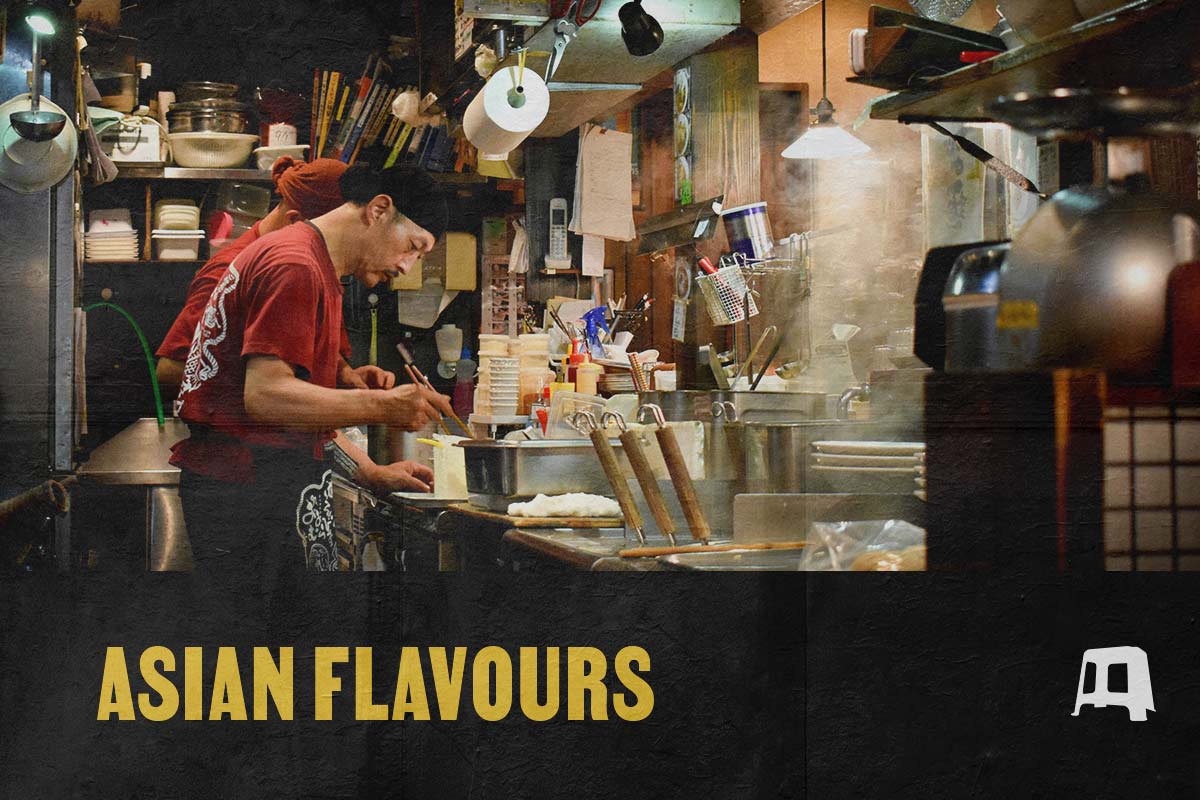
From the grills of Bangkok and the noodle shops of Hanoi to the late-night izakayas of Tokyo and the spice-filled kitchens of Mumbai, food across Asia is anything but predictable.
There isn’t one flavour profile, one way of cooking or even one definition of what street food looks like. Every part of Asia has its own way of doing things and, over time, those flavours have travelled, crossed paths and changed along the way. Key ingredients have found their way into new kitchens, while recipes have been adapted to suit different cultures, ingredients and landscapes.
That’s why Asian street food never feels predictable. There’s always another flavour combination, another dish or another twist waiting to be discovered.

Flavour has always been on the move
Long before modern supply chains, ingredients were already crossing borders. The Silk Roads were a shifting network of land and maritime routes connecting communities across Asia, the Middle East and Europe. Along them travelled spices, foodstuffs and other goods, but also knowledge, techniques and ideas. The routes changed over time, and so did what moved along them.
Once an ingredient arrived somewhere new, it rarely stayed exactly the same. Cooks worked with what was familiar, experimented with what was available and adapted recipes to suit their surroundings.
The chilli plot twist
Chilli peppers originated in the Americas. After the Columbian Exchange, they spread around the world and reached Asia during the 16th century. They were then adopted into food cultures across parts of the continent, becoming an important ingredient in many regional cuisines.
Today, chilli is deeply woven into many Asian food cultures, from Korean gochujang and Thai curry pastes to regional cuisines across India and China.
It’s hard to imagine some of these cuisines without that heat, yet the ingredient itself arrived from thousands of miles away.
What holds these flavours together?
There is no single formula for Asian street food. Asia is simply too vast and its food cultures far too varied, but there are some flavour ideas that keep appearing.
Balance
In many Asian cuisines, different flavours are there to work together rather than compete.
Thai food is a great example. Sweet, sour, salty and spicy flavours often come together in the same dish, with ingredients such as lime, fish sauce, sugar and chilli each bringing something different to the final balance.
A rich dish gets a sharp hit of lime. Something spicy gets a little sweetness. Fresh herbs cut through something smoky and savoury. It all comes back to balance.
Fermentation
Fermentation brings another layer altogether.
In Korea, jang refers to a family of fermented sauces including gochujang, doenjang and ganjang. They form an important part of Korean food culture, with fermentation and ageing helping to develop deep, savoury flavours.
Gochujang brings chilli, sweetness and savoury depth together in one ingredient. It’s a good example of how time can do some serious work in the kitchen.
Freshness
Vietnamese food makes serious use of fresh herbs and leafy greens alongside noodle dishes and other street food. Mint, coriander and basil can add fragrance, freshness and texture, while lime and chilli bring another hit of acidity and heat.
They might look like a finishing touch, but they can completely change the dish.
Umami
Japanese cooking takes another route to depth. In 1908, Japanese chemist Kikunae Ikeda identified glutamate in kombu as the source of a distinctive savoury taste and named it umami.
Dashi, traditionally made with ingredients such as kombu and katsuobushi, is an important source of umami in Japanese cooking. Miso and soy sauce bring further savoury depth, while regional ingredients and techniques add plenty of variation.

3 Asian flavour powerhouses
Asia spans freezing northern steppes, lush tropical archipelagos, rugged mountain ranges and fertile river plains. With such a huge range of landscapes and food cultures, it’s no surprise that ingredients, techniques and flavour profiles vary dramatically across the continent.
To navigate this massive culinary universe, we can look at three broad regions, each with its own distinctive food traditions and flavours.
1. East Asian cuisine
Across East Asia, you’ll find everything from long-established fermentation traditions to high-heat cooking techniques, with each cuisine doing things its own way.
China: Chinese cooking varies hugely from region to region, but techniques such as stir-frying in a wok are central to many dishes. High heat allows ingredients to cook quickly while developing colour, aroma and texture. Soy sauce has deep roots in Chinese cooking, while sesame oil and oyster sauce are also widely used.
Japan: Japanese cuisine places strong emphasis on seasonal ingredients and carefully handled flavours. Alongside the umami-rich depth of dashi, ingredients such as miso, soy sauce, mirin, rice vinegar, ginger and sesame are used to build flavour, while ingredients like yuzu, wasabi and shiso bring brightness, heat and freshness.
Korea: Korean food brings together bold, savoury flavours with plenty of heat and texture. Alongside gochujang and other fermented ingredients, garlic, ginger, sesame, soy, spring onions and chilli are used across everything from marinades and grilled meats to noodles, rice dishes and stews. Kimchi adds another layer of acidity, spice and crunch.
2. Southeast Asian cuisine
Move further south and you’ll find food cultures with their own distinctive combinations of aromatic herbs, chillies, seafood, coconut and contrasting flavours. There’s huge variety across the region, but balance is a common thread.
Thailand: Thai cooking is known for bringing contrasting flavours together. Sweet, sour, salty and spicy elements can all play a part in the same dish, with ingredients such as palm sugar, lime, tamarind, fish sauce and chilli helping to create that balance.
Vietnam: As explored in our deep-dive into Vietnamese food culture, this cuisine is all about aromatic broths,crispy baguettes and overflowing platters of fresh herbs like Thai basil,coriander and mint.
Malaysia and Indonesia: Both cuisines have developed through centuries of local traditions and cultural exchange, with ingredients and techniques varying considerably from one region to another. Aromatic herbs, spices, chillies, coconut, fermented ingredients and seafood all feature across different regional cuisines.
3. South Asian cuisine
Moving into South Asia, spices take centre stage, but there is no single South Asian flavour profile. India, Pakistan, Bangladesh, Sri Lanka and their neighbouring regions all have their own food traditions, ingredients and cooking techniques.
The world of masala: In Indian cooking, spices can be toasted, fried in oil or added at different stages of cooking, depending on the dish and region. Mustard seeds, cumin, coriander, cardamom, cloves and many other spices can be combined with fresh aromatics such as ginger, garlic and onion to build layers of flavour.
The tandoor fire: The tandoor is an important cooking tradition across parts of South Asia, particularly in northern India and neighbouring regions. Its intense heat creates the characteristic charred edges found on foods such as naan and tandoori meats. Further south, coconut, curry leaves, tamarind and seafood feature prominently in many regional dishes, showing just how varied South Asian cooking can be.

Bring these flavours to your menu
Flavours travel, ingredients find their way into new kitchens and dishes change as chefs put their own spin on them. That’s something we love about food. It gives us plenty of inspiration but always leaves room to do something different with it.
At The Street Food Company, we look to food cultures around the world for ideas, then turn the flavours that catch our attention into products built for busy professional kitchens.
Our Asian-inspired range brings together sauces and pastes inspired by Korean, Vietnamese, Malaysian, Indonesian and Burmese flavours, alongside ready meals, prepared meats, Street Icons and desserts.
So whether you’re looking to amp up your menu, create a new concept with an Asian-inspired twist or simply find a new flavour to work with, there’s plenty to explore.


